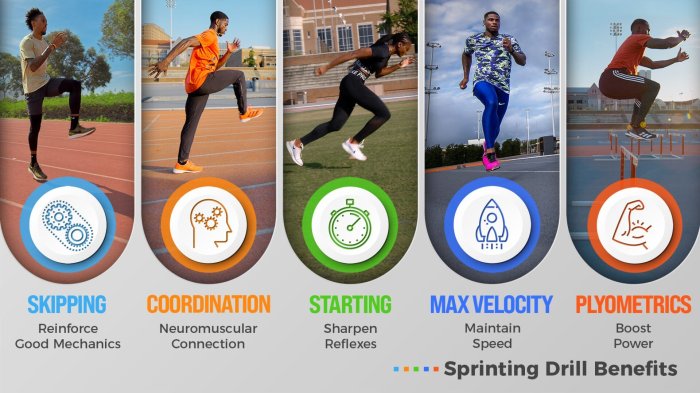
Sprinting technique drills are essential for athletes looking to maximize their speed and efficiency on the track. By focusing on the fundamental components of sprinting, such as posture and arm movement, athletes can significantly enhance their performance. These drills are not only beneficial for track and field competitors but also for participants in various sports, making them a versatile training tool.
Understanding the intricacies of sprinting techniques allows athletes to refine their skills and adapt their training to suit different sports. This overview will take you through the core elements of effective sprinting, the most impactful drills to implement, and how these techniques translate across various athletic disciplines.
Sprinting Technique Fundamentals
Sprinting is a high-intensity athletic activity that requires precise technique to maximize speed and efficiency. By understanding the fundamentals of sprinting technique, athletes can enhance their performance and reduce the risk of injury. This section delves into the essential components of proper sprinting technique, focusing on posture and arm movement, both of which are crucial for achieving optimal speed on the track.
Basic Components of Proper Sprinting Technique
To achieve an effective sprint, athletes must incorporate several key elements into their technique. These components work together to create a cohesive and powerful running style. Below are the fundamental aspects of proper sprinting technique:
- Starting Position: The stance at the beginning of a sprint is critical. Athletes should bend their knees and lower their hips, ready to push off explosively.
- Foot Strike: A midfoot strike is ideal, allowing for maximum traction and minimizing braking forces. Proper foot placement enhances acceleration and maintains speed.
- Stride Length and Frequency: A balance between long strides and quick turnover is key. Sprinters should aim for an efficient stride that maximizes distance while maintaining a rapid pace.
Posture Elements Enhancing Sprinting Efficiency
Proper posture plays a significant role in sprinting efficiency. Maintaining a strong, upright position allows for improved oxygen intake and optimal power transfer through the body. Key posture elements include:
- Head Position: The head should be aligned with the spine, looking forward to maintain balance and focus.
- Shoulder Alignment: Relaxed shoulders should be kept low and back, allowing for free movement of the arms without tension.
- Hip Position: Hips should be slightly forward to facilitate drive and propulsion during each stride.
Importance of Arm Movement in Sprinting Speed
Arm movement is a critical but often overlooked aspect of sprinting technique. The arms serve as counterweights to the legs, helping to maintain balance and propel the body forward. Key points regarding arm movement include:
- Arm Swing: Dynamic arm movement should be synchronized with leg movements. Arms should move in a straight line, driving forward and backward to aid momentum.
- Elbow Angle: Maintaining a 90-degree angle at the elbows allows for effective swinging. This position promotes a powerful arm drive, which translates to increased speed.
- Relaxation: Tension in the arms can hinder movement. Keeping the arms relaxed while ensuring strong, rhythmic swings will optimize sprinting efficiency.
The synchronization of arm and leg movements is vital to maximizing speed and efficiency in sprinting.
Sprinting Drills for Improvement

Sprinting speed is a crucial aspect of athletic performance, and incorporating specific drills into training can help athletes enhance their sprinting technique and overall speed. This section Artikels various drills designed to improve sprinting mechanics, power, and efficiency, along with a structured training plan for effective implementation.
Effective Drills for Enhancing Sprinting Speed
A variety of drills can target different aspects of sprinting, from acceleration to maximum velocity. The following list presents effective drills along with their purposes and methodologies for execution:
- High Knees: This drill focuses on improving knee drive and hip flexor strength. Athletes should march in place while lifting their knees high towards their chest, driving their arms in coordination. Perform for 20-30 seconds.
- Butt Kicks: Butt kicks enhance hamstring flexibility and strength. Athletes jog in place, kicking their heels towards their glutes, while maintaining an upright posture. This should be done for 20-30 seconds.
- A-Skip: The A-skip drill emphasizes proper sprinting form and coordination. Athletes skip forward, lifting one knee high while driving the opposite arm forward, alternating legs for 20-30 meters.
- B-Skip: This drill builds on the A-skip, adding a straight leg extension. Athletes perform a skip while extending the leg forward, focusing on a smooth transition. Execute for 20-30 meters.
- Sprint Strides: Sprint strides develop speed and running economy. Athletes gradually accelerate to 90% of their maximum speed over 30-40 meters, focusing on relaxed breathing and form.
- Bounding: This explosive drill enhances power through long strides. Athletes push off with one foot, driving the opposite knee up and landing on the opposite foot. Perform for 20-30 meters.
- Acceleration Sprints: This exercise improves start speed. Athletes sprint from a stationary position over a distance of 10-30 meters, focusing on explosive power from the blocks or a standing start.
Structured Training Plan Incorporating Drills
To maximize the benefits of these drills, a structured training plan is essential. Below is a sample weekly training schedule that integrates sprinting drills, allowing athletes to progressively enhance their speed.
| Day | Drill Focus | Details |
|---|---|---|
| Monday | Warm-up & High Knees | Dynamic warm-up followed by 5 sets of high knees (30 seconds each) with rest. |
| Tuesday | Acceleration Sprints | 5 sets of 20 meters sprints from a stationary position with full recovery. |
| Wednesday | Recovery & Flexibility | Light jog followed by stretching and foam rolling for recovery. |
| Thursday | A-Skip & B-Skip | 10 sets of A-Skip and 10 sets of B-Skip over 30 meters each. |
| Friday | Sprint Strides | 5 sets of 40 meters at 90% effort with focus on technique. |
| Saturday | Bounding & Butt Kicks | 5 sets of bounding over 30 meters and 5 sets of butt kicks. |
| Sunday | Rest | Complete rest or light activity for recovery. |
“Improving sprinting speed requires a mix of technique, strength, and targeted drills.”
Sprinting in Relation to Other Sports
Sprinting is a fundamental athletic skill that transcends various sports disciplines, showcasing its versatility. In understanding how sprinting techniques differ across contexts, it’s essential to explore the nuances in track and field versus team sports, the role of sprinting drills in martial arts, and the adaptation of these techniques in motorsports.
Sprinting Techniques in Track and Field Versus Team Sports
Track and field events focus on pure speed and technique, with sprinters trained to maximize their acceleration and top speed in a straight line. The techniques emphasize posture, arm movement, and leg drive, with specific drills designed to enhance these aspects. In contrast, team sports like soccer or basketball incorporate sprinting in a more dynamic context—often requiring quick changes of direction, acceleration, and deceleration within the framework of gameplay.
The difference in application means that while track athletes may prioritize a linear sprinting style, team sport athletes must focus on agility and the ability to sprint effectively amidst strategic movements.
Sprinting Drills in Martial Arts
In martial arts, sprinting drills serve a crucial role in enhancing performance by improving speed, stamina, and reaction times. The explosive nature of martial arts techniques often necessitates rapid bursts of speed, making sprinting drills a fundamental part of training regimes. These drills help practitioners develop quick footwork and the ability to transition efficiently between techniques. Examples of drills might include short sprints followed by immediate combat scenarios, allowing martial artists to practice their skills under conditions that mimic actual performance.
Adaptation of Sprinting Techniques in Motorsports
Motorsports may seem distant from traditional sprinting, yet the principles of speed and acceleration are remarkably relevant. Drivers must execute precise movements and quick sprints during certain race conditions, such as during pit stops or when exiting the vehicle. Training often incorporates sprinting drills to enhance cardiovascular fitness and reaction times. For instance, a driver may practice sprinting to and from the car to simulate the urgency of a pit stop, reinforcing the connection between physical conditioning and performance under pressure.
This holistic approach highlights how sprinting techniques are adapted to fit the unique demands of motorsport environments.
End of Discussion
In conclusion, mastering sprinting technique drills is vital for athletes striving to improve their speed and overall performance. By incorporating these drills into regular training regimens, athletes can achieve greater efficiency and effectiveness in their respective sports. Whether on the track, in team sports, or even in martial arts, the benefits of honing sprinting techniques are undeniable, paving the way for success in the competitive arena.
Questions and Answers
What is the best way to warm up before sprinting drills?
A proper warm-up should include dynamic stretches and light jogging to prepare your muscles and prevent injury.
How often should I practice sprinting technique drills?
Practicing 2-3 times a week is ideal for improvement while allowing your body to recover properly.
Can sprinting drills help in weight loss?
Yes, sprinting drills can boost metabolism and burn calories, contributing to weight loss when combined with a balanced diet.
Are sprinting drills suitable for beginners?
Absolutely! Beginners can benefit greatly from basic sprinting drills designed to develop proper technique and gradually increase speed.
How long should each sprinting drill session last?
Each session should typically last between 30 to 60 minutes, depending on the intensity and volume of workouts.


